This wastewater originates from the production processes of a food manufacturing facility specializing in prepared dishes, rice, and noodle products.
Processing Requirements
Raw Water:Food processing plant wastewater;
Capacity:10 T/D;
Inlet Water:
COD:1200mg/L;
SS:40mg/L;
Ammonia Nitrogen:7.27mg/L;
PH:7.21.
Outlet Water:
COD:≤120mg/L.
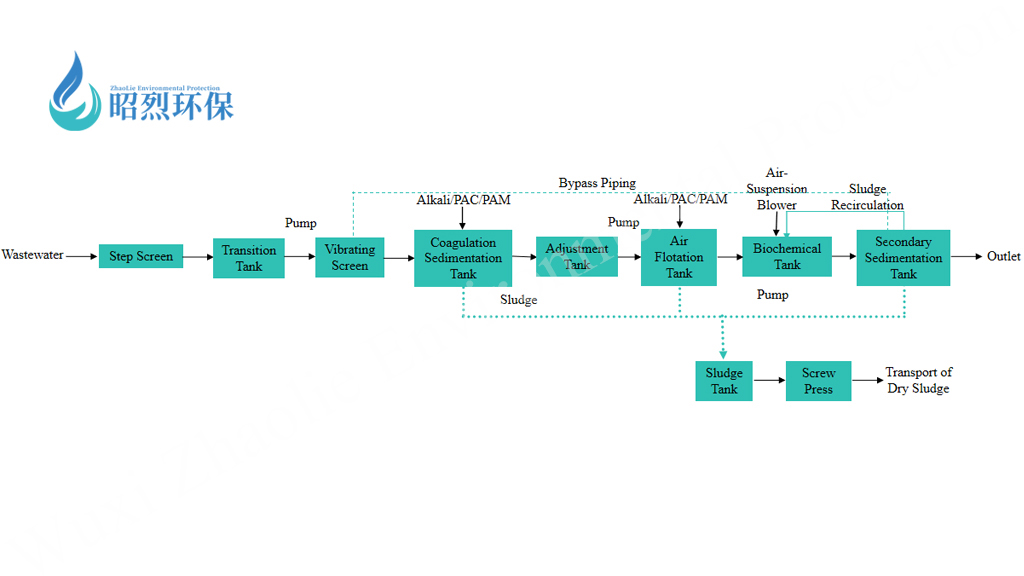
Process Flow
Process Characteristics
- High Flexibility and Robustness: The process incorporates bypass piping, enabling operators to flexibly bypass intermediate treatment units in response to fluctuations in influent quality and flow rate, equipment maintenance requirements, or the need to treat specific contaminants. This approach reduces operation and maintenance costs while enhancing the system’s capacity to handle complex wastewater variations and bolstering its operational reliability.
- The combination of flocculation-sedimentation and air flotation enables the efficient removal of suspended solids and a reduction in wastewater turbidity, thereby creating favorable conditions for subsequent treatment.
- A four-stage aerobic reaction process is employed to optimize and enhance the diversity of the microbial population.
- Within this four-stage aerobic process, varying levels of dissolved oxygen, substrate concentrations, and hydraulic conditions create a suitable living environment for a wide variety of microorganisms.
- This facilitates the growth and proliferation of microbial communities with diverse functions, thereby establishing a rich microbial ecosystem and significantly improving the system’s treatment efficiency.
- Furthermore, in the four-stage aerobic process, owing to the differing environmental conditions in each stage, microorganisms are able to grow in a relatively stable environment; this prevents the problem of sludge bulking—caused by the excessive proliferation of filamentous bacteria.