Regarding the differential gears used in decanter centrifuge, we have previously outlined the operating principles, structural features, technical specifications, and performance characteristics of three common types; next, we will explore their application scenarios.
1.Planetary Differential
Planetary differentials are suitable for decanter centrifuges operating across a wide range of torque and differential speed conditions; they are particularly well-suited for applications requiring high separation factors, high differential speeds, and high scroll drive torques.
Its advantages—including high load-bearing capacity, compact structure, small space, wide differential speed range, and high transmission efficiency—make it the mainstream choice for decanter centrifuges.
In terms of applications, planetary differentials are widely used in:
Chemical Industry: Dye dewatering, barium sulfate dewatering, drilling mud classification, sulfuric acid clarification and classification, coal tar clarification, etc.
Food Processing: Fruit juice clarification (dregs removal), soy protein juice extraction, peanut protein dewatering, animal and vegetable oil refining (dregs removal), fish meal dewatering, bone glue dewatering, etc.
Environmental Protection: Municipal sewage, industrial abrasive dewatering, spent grain dewatering, power plant sludge dewatering, paper mill sludge dewatering, brewery wastewater, iron and steel smelting wastewater, etc.
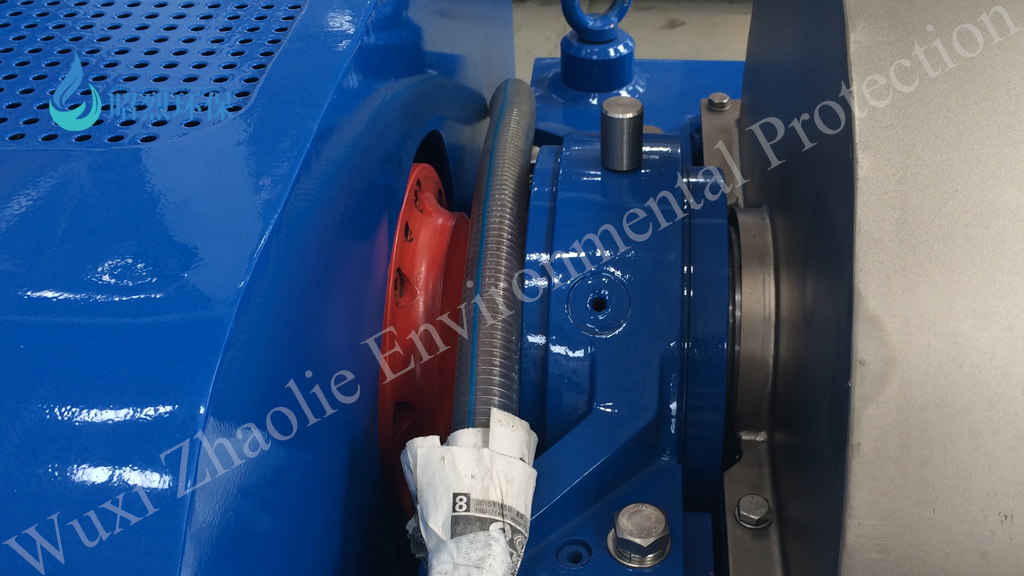
2.Cycloidal Pin-Wheel Differential
Cycloidal pin-wheel differentials are suitable for low-power decanter centrifuges.
In terms of application, cycloidal pin-wheel differentials are widely used in:
Environmental Protection: Small decanter centrifuges with a processing capacity of 5–20 m³/h.
Food Industry: Beverage clarification and vegetable oil refining.
Chemical Industry: Separation of fine chemical products.
Pharmaceutical Industry: Separation of pharmaceutical intermediates.
3.Hydraulic Differential
Hydraulic differentials are primarily suitable for the separation of media with high viscosity and high solids content, as well as for applications requiring high torque:
High-Concentration Media: separation of iron and steel slag, purification of coal mine wastewater, treatment of oil drilling fluids, and dewatering of high-concentration sludge.
Applications in specialized industries:
Petrochemicals: Drilling mud treatment, oilfield wastewater treatment.
Mining: Ore flotation, tailings treatment.
Iron and Steel/Metallurgy: Blast furnace slag treatment, steel slag separation.
Power Generation: Fly ash dewatering, gypsum processing.
Applications Requiring Precise Differential Speed Control: Operations necessitating frequent differential speed adjustments, applications involving significant variations in media properties, and scenarios demanding extremely high separation efficiency.
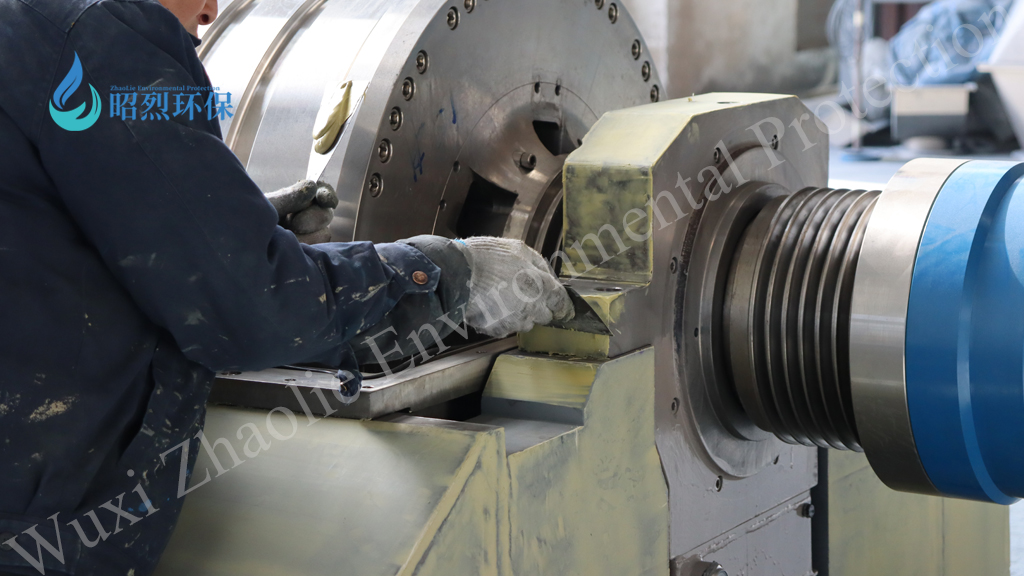
In summary, the processing capacity is the key factor when selecting a differential for a decanter centrifuge.
For small decanter centrifuges with a processing capacity of less than 20 m³/h, a cycloidal pin-wheel differential may be selected;
For medium-sized decanter centrifuges with a capacity of 20–100 m³/h, a planetary differential may be selected;
For large decanter centrifuges with a capacity exceeding 100 m³/h, a hydraulic differential is recommended.