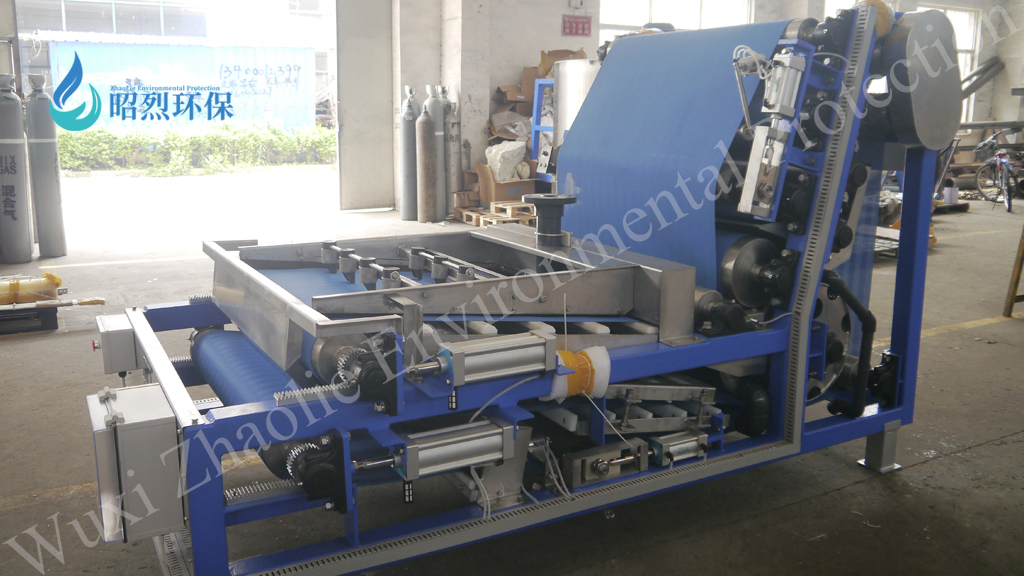
Belt filter press offer numerous advantages, including high processing capacity, continuous operation, simple operation, and strong adaptability. Consequently, they are not only widely utilized in the municipal sector but also find extensive application in various other industrial fields, such as mining, chemicals, steel, and food processing.
From the perspective of filtration principles, the belt filter press is an open-type filtration device; its filtration process constitutes a state of equilibrium between the filtration pressure and the resistance of the filter cake.
Since sludge (or material) filtration processes vary significantly, the structural design of dewatering machines must be specifically tailored to meet the requirements of the dewatering process. In other words, the structural configurations of belt filter presses differ across various industries.
Generally speaking, the two key indicators for assessing sludge filtration performance are Specific Resistance to Filtration (SRF) and Capillary Suction Time (CST); these parameters vary significantly among different types of sludge.
Therefore, for sludge exhibiting poor dewatering characteristics, it is essential not only to subject it to pretreatment to enhance its dewatering performance, but also to ensure that the structure of the belt filter press—along with the configuration of its dewatering system—is adapted to the entire filtration process, thereby achieving the desired filtration results.
1.The Primary Basis for Design Selection
Sludge Characteristics: Industry and source, composition, moisture content, total volume, etc.;
Process Requirements: Operating schedule, moisture content of the filter cake, etc.;
If necessary, sludge filtration performance tests may be conducted.
2.Other Requirements for Process Design
During the design phase, consideration must also be given to sources of flushing water and compressed air, available site space, the configuration of the deodorization system, the degree of system automation, and the storage and transport of sludge.
3.How to Identify a Good Belt Filter Press?
A high-quality belt filter press possesses the following characteristics:
First, the structural design must be rational, satisfying the requirements of both theoretical principles and practical application. It should feature appropriately sized sections—including gravity, pre-pressing, and pressing zones—and be equipped with comprehensive auxiliary functions, efficient drainage, and ease of use and maintenance.
In this context, the dimensions of the pressing section essentially correspond to the number of press rollers. Given the need to balance filtration time with filtration pressure, having either too few or too many rollers is inappropriate.
Secondly, the detailed configuration of the machinery—including the materials used for structural components, the selection of filter belts, and the choice of transmission systems—must be appropriate and rational. These elements must be capable of withstanding the harsh conditions inherent in sludge treatment environments; specifically, the quality of all components, whether manufactured in-house or procured from external suppliers, must meet rigorous standards.
Third, superior manufacturing quality endows the machine with excellent stability and a sufficiently long service life. Naturally, this requires substantial technical expertise and managerial experience.
Furthermore, the machine should, to the greatest extent possible, possess a sense of industrial design to enhance the aesthetic appeal of the site.
4. A complete sludge dewatering system is equally important, comprising flocculant preparation and dosing, sludge-chemical mixing, sludge conveyance, and sludge storage.
1.Municipal Biological Sludge
Thickened Sludge (Gravity-thickened, Nitrifying Sludge, etc.)
Model BFPA Belt Filter Press(Available with 8, 10, or 12 pressing rollers)
Model BFPB Belt Filter Press(Available with 5, 6, or 7 pressing rollers)
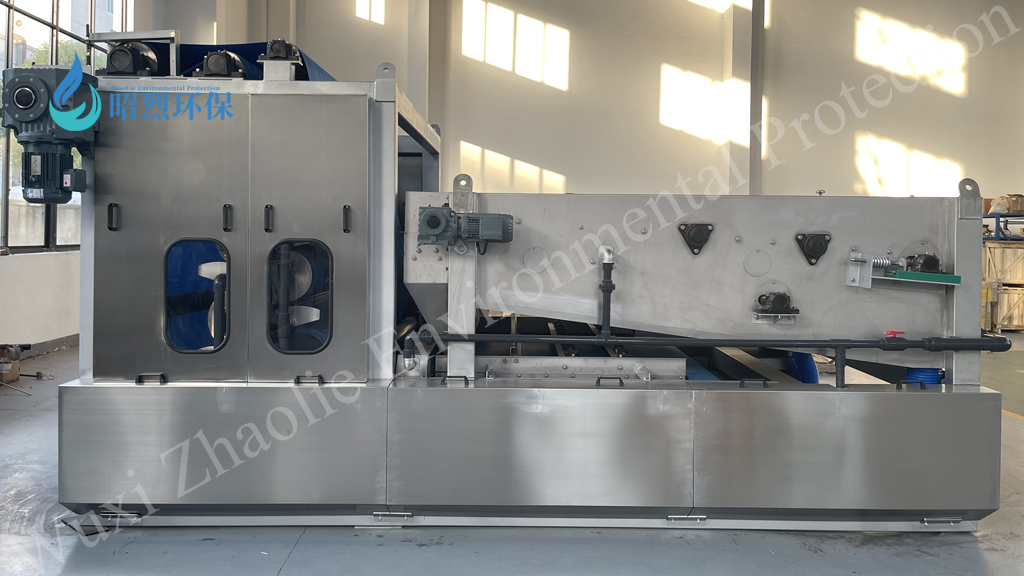
2.Unthickened Sludge (Aerobic Waste Sludge, etc.)
Model TBFP Belt Filter Press with Thickener(Available with 8, 10, or 13 pressing rollers)
Model TBFPF Belt Filter Press with Thickener(Available with 7, 9, or 11 pressing rollers)
Model DTFBP Belt Filter Press with Drum Thickener(Available with 7, 9, or 11 pressing rollers)
System Integration
1.Ancillary Equipment
The system comprises, at a minimum, equipment such as flocculant preparation and dosing units, sludge pumps, chemical dosing pumps, flushing pumps, and screw conveyors. Any additional equipment required must be customized to meet the client’s specific requirements or process needs.
Naturally, the system’s automation and intelligence features will be configured in accordance with client requirements, thereby meeting the operational needs of various scenarios.
2.System Design
System design is a highly specialized undertaking. Typically, we assist our clients with component selection and system design to ensure that this professional process proceeds as smoothly as possible.
All in all, any good piece of equipment must be adjusted to suit the specific circumstances in order to deliver a positive user experience. There is no single “best” device—only the one that is right for you.